
The Tool I Use
I use the software Soundminer to enter metadata for my sound libraries, striving to be as complete and detailed as possible. I find it important to be transparent and to provide the user with as much information as possible. Without knowing anything about these sounds, the user should be able to project itself. Indicating the location where the sound was recorded, the season, whether it was day or night for example, will provide information to the listener to help in their search and listening.
In this process, I use the UCS categorization, which helps me in classifiyng the sounds. Additionally, a large number of categories are used.
Example of Nomenclature
The organization of the nomenclature is structured as follows, example of a sound found in the pack Night In Kyoto.
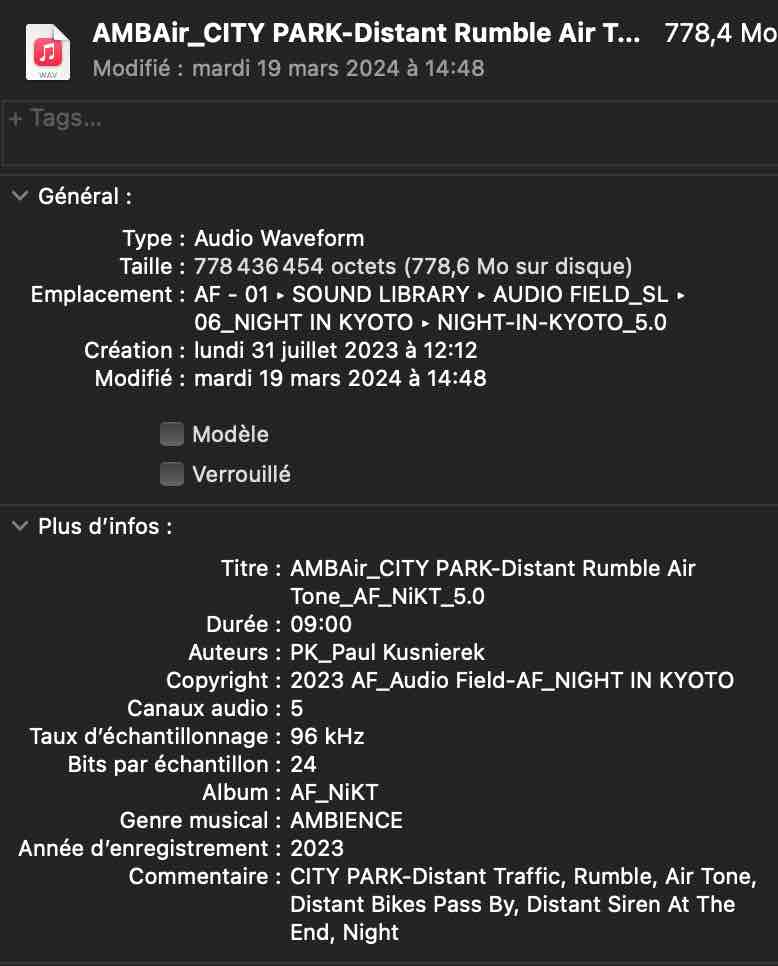
These elements are visible in the sound name without the need for a specific search engine or DAW, and some specifics like file size, sampling rate, and duration will be visible in the sound information (right-click, read information).
Opening The File In Soundminer
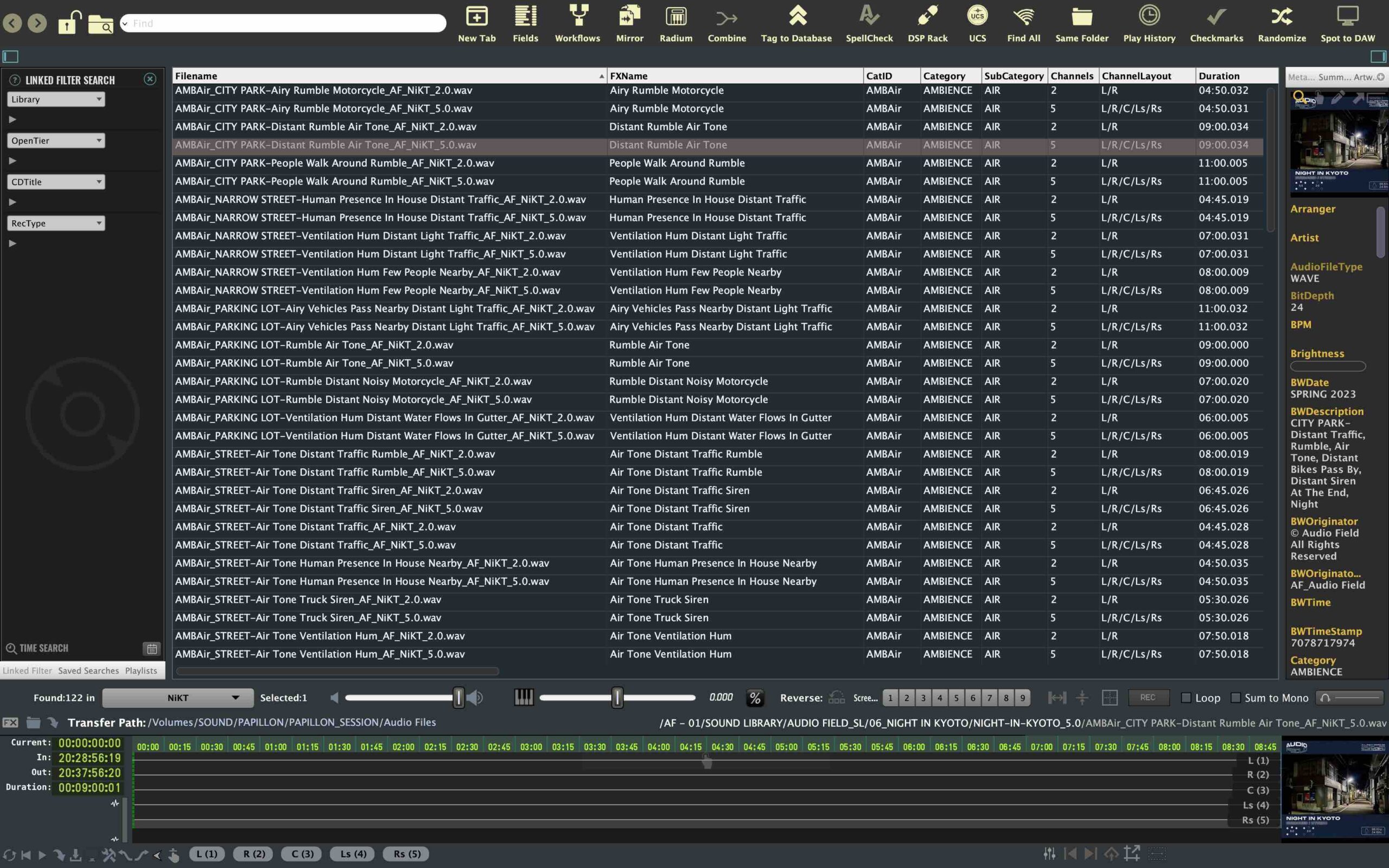
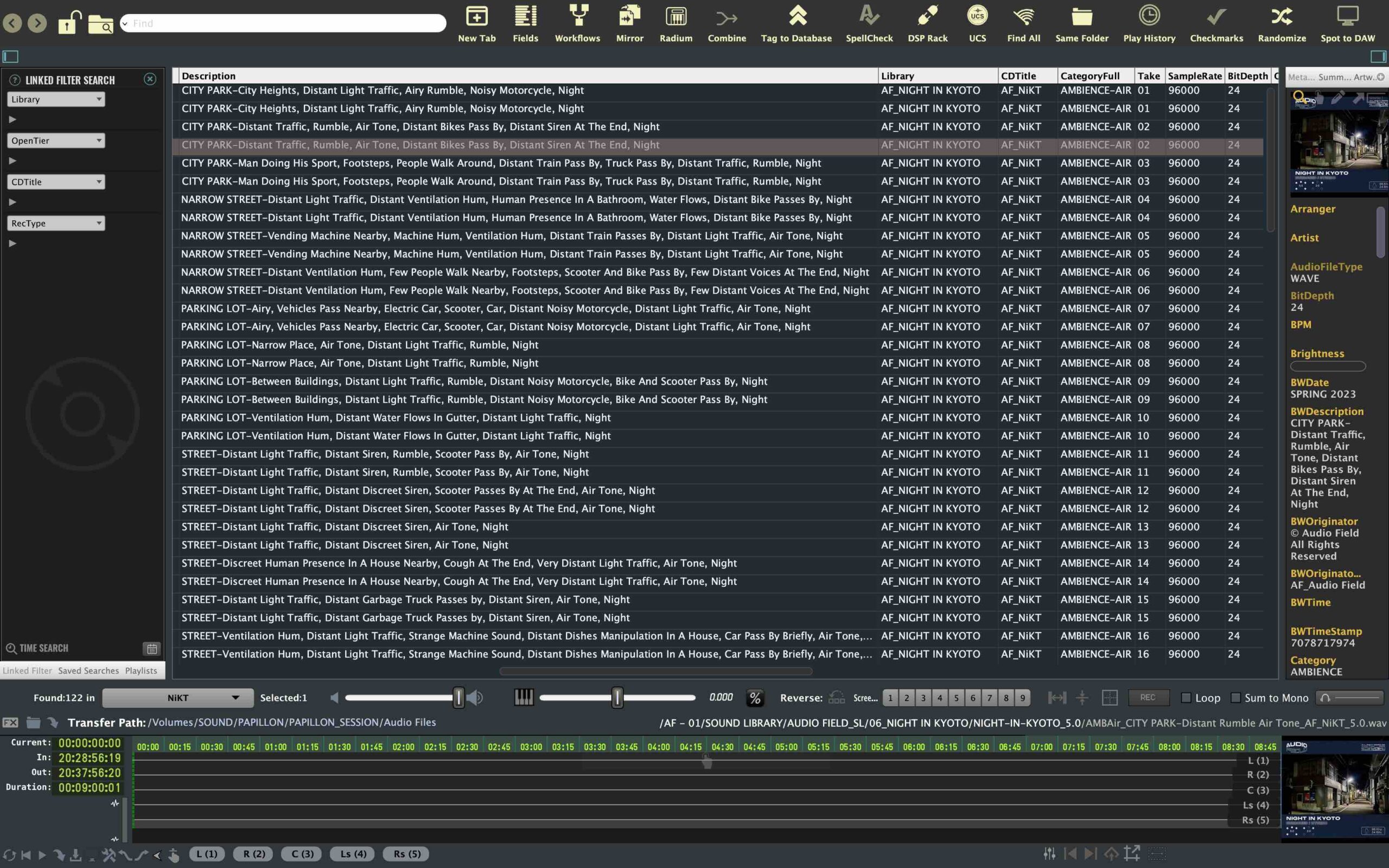
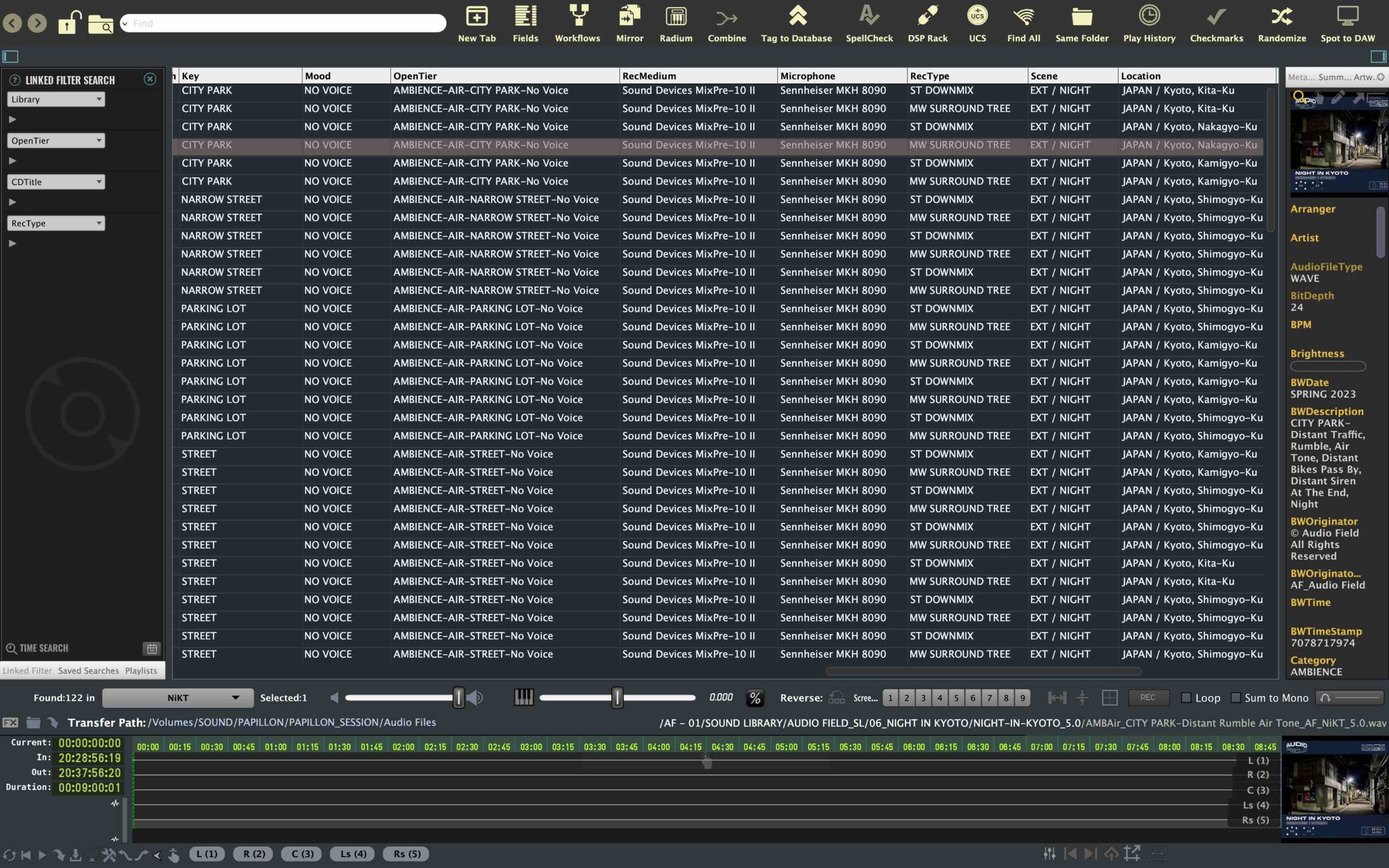
If you open the file in a specific search engine, here Soundminer, you’ll discover that the sound contains much more metadata. You will, of course, find the elements mentioned above, as well as specific metadata filled in by the manufacturer.
Importance Of Metadata
Entering metadata is laborious but necessary. In my view, providing as much information as possible establishes multiple paths to finding the sound, various ideas can lead to the desired sound. The use of the UCS categorization is very useful to me and allows for standardization of sounds for use by other sound editors, simplifying the search process. Even though this work will never be perfect and different viewpoints on creating a sound library will always exist, this is how I organize my work.